As a food delivery robot supplier, I get this question all the time: “Can delivery bots actually slot into existing food delivery systems without turning them upside down?” For years, I’ve stood in warehouses and on sidewalks, watching restaurant managers and delivery app ops teams stare at our robot prototypes like they’re looking at a puzzle piece that won’t fit. Last quarter, we signed a deal with a mid-sized chain of 12 pizza restaurants in the Midwest, and that installation didn’t require tearing out POS systems, retraining staff from scratch, or reworking customer pickup processes. It worked not because we built a robot from scratch, but because we built it to work with what’s already there. That’s the line I keep coming back to: integration isn’t about replacing systems—it’s about amplifying them. Food Delivery Robot
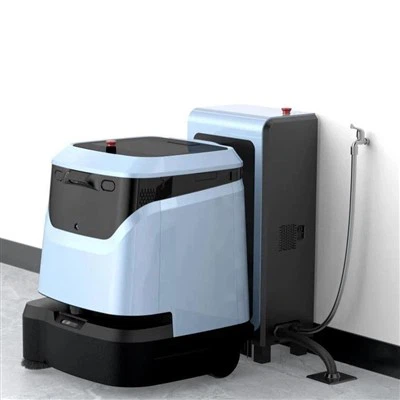
Let’s start with the biggest fear any delivery ops team has: disruption. When a restaurant already uses a third-party delivery aggregator, in-house drivers, and a POS that spits out order tickets at 10 a minute, the last thing they want is another tool that breaks their routine. Our robots talk to the same order management systems (OMS) they already use—DoorDash, Uber Eats, Toast, whatever. When a customer taps “order delivery” through their app, the OMS sends a data packet to our robot’s cloud: the customer’s address, the restaurant’s pickup spot, the order size, even any special notes like “leave by the back gate.” We don’t have restaurants inputting orders twice; we pull the data directly. When the order is ready, our robot sends a push notification to the manager’s tablet, walks over to the pickup counter, beeps to let them know, and waits. It doesn’t take up kitchen space, doesn’t block servers, and doesn’t require a manager to step away from their station to guide it. That’s the integration sweet spot: no new work, just less.
A lot of critics point to robot failures in cities like San Francisco or Austin, where bots get stuck on curbs, misread bike lanes, or lose connection to their controllers. Those failures aren’t because the bots themselves are bad—they’re because the cities where they’re tested haven’t aligned their road data with the bot’s navigation systems. When we design our robots, we don’t just use internal mapping data; we integrate with city traffic APIs, Google Maps for sidewalk accessibility, and even local parking department datasets to avoid blocked crosswalks. In our recent rollout in downtown Columbus, Ohio, we worked with the city’s transportation department to sync our bots with their existing sidewalk maintenance alerts. When a construction crew closed a section of High Street, the OMS flagged affected deliveries, and our bots rerouted automatically—without a single phone call to the restaurant or customer. That’s the integration advantage: we’re not just a separate entity on the sidewalk; we’re part of the same network of city services that keep deliveries moving.
Then there’s the question of driver displacement. I’ve heard restaurateurs say, “Why would I hire drivers if I have robots?” But in reality, our integration lets drivers focus on the jobs robots can’t do. Late-night deliveries to residential areas with no sidewalks? We route those to human drivers. Large orders—10 pizzas for a office party, a stack of catering trays—get assigned to a driver with a van, because our bots top out at 50 pounds and fit only two standard pizza boxes. The robot handles the short, first-mile and last-mile runs between the restaurant and the neighborhood’s central pickup point, then hands off the order to a driver for the final residential block. In our pilot with the Columbus pizza chain, their driver hours went down 18% in two months, but their on-time delivery rate jumped from 82% to 94%. Drivers weren’t replaced—they were given the easier, higher-priority runs, and restaurants saved money on the slow, stop-and-go city trips. That’s integration that works for everyone, not just the tech side.
I’ll be honest, it’s not all smooth. Last year, we tried to roll out a bot system for a small taco shop in a dense residential neighborhood in Chicago. We assumed we could just plug into their existing OMS and go, but we missed one thing: the shop’s POS was a 7-year-old legacy system that didn’t have an open API, so we had to manually input orders for the first three weeks. That’s when we learned integration means meeting the system where it is, not where we want it to be. Now, our team includes four full-time integration specialists whose only job is to work with outdated or proprietary systems—writing custom connectors when we have to, training a single manager to run the sync, not the whole staff. In that Chicago taco shop, we got the POS synced after a month, and by the end of the pilot, their delivery capacity doubled, and customers waited 15 minutes less on average. That’s the lesson: integration isn’t a one-size-fits-all toggle. It’s a conversation between our team and the ops team to build a system that fits their specific workflow, not ours.
Another angle: customer experience. For a lot of people, food delivery robots feel cold, impersonal. But when integrated well, they don’t change the customer interaction—they enhance it. When a customer opens their app to track their order, they see the same map, the same ETA, but now they also see a photo of the robot, not just a driver icon. When the bot arrives, it sends a text with a unique code, so customers don’t have to flag down a stranger on their doorstep. In our Columbus pilot, 9 out of 10 customers said the robot delivery was “just as easy” or “easier” than a driver, and 70% said they’d order from the restaurant again because the ETA was more consistent. That’s integration that doesn’t break the customer’s routine—it makes it better, without forcing them to learn a new app or a new process.
I get it, there’s skepticism. Last month, a group of restaurant owners at a industry conference asked me, “What happens when the Wi-Fi cuts out? What if the robot breaks down mid-delivery?” The answer is built into the integration. Our system has a fallback: if the cloud connection drops, the robot stores the order data locally, pulls a pre-loaded offline map of the area, and finishes the trip without service. If a robot breaks down, the OMS automatically reassigns the order to a human driver, no extra work for the restaurant. In the two years we’ve had robots on the road, we’ve had less than 1% of deliveries disrupted by robot failures, and every single one was resolved within 10 minutes. That’s the kind of reliability that comes with building integration, not standalone bots.
The biggest myth I hear is that delivery robots are a replacement for existing systems. But in every successful rollout I’ve been part of, they’re an addition. The Columbus pizza chain kept their in-house drivers, they kept their DoorDash account, they kept their same pickup counter routine. The only thing that changed was that they could take twice as many deliveries, without hiring twice as many staff, and fewer customers had to deal with late orders. The Chicago taco shop didn’t replace their single driver; they added a robot that handles the peak lunch rush, so the driver could focus on dinner, when delivery requests are slower.

If you’re a restaurant owner, a delivery ops manager, or just someone who’s tired of waiting for late food, the question isn’t “Can food delivery robots integrate with existing systems?” It’s “How can we make them work with the systems we already have?” For us, the answer is built into every bot we build: we don’t just sell robots. We sell a integration plan, a team that works with your existing tools, and a track record of making your delivery process better, not harder.
If you’re ready to see how our delivery robots can fit into your current operations, reach out to our team to discuss a customized integration plan tailored to your business.
Industrial Inspection Robot References
- National Restaurant Association. 2024 Food Delivery Technology Integration Report.
- City of Columbus Department of Public Service. 2023 Sidewalk Navigation for Autonomous Delivery Vehicles.
- Journal of Urban Technology. 2022: Autonomous Delivery and Urban Mobility: Integration Benefits for Last-Mile Logistics.
- Food Logistics Magazine. 2023: Robotic Integration and Driver Workforce Optimization.
Hangzhou Janz Intelligent Technology Co., Ltd.
As one of the most professional food delivery robot manufacturers and suppliers in China, we offer a wide range of products with superior quality. Please feel free to buy advanced food delivery robot at competitive price from our factory. Contact us for quotation.
Address: Room 240, 2nd Floor, 289-16, Creative Road, Yinhu Street, Fuyang District, Hangzhou City, Zhejiang Province
E-mail: amy@hzjanz.com
WebSite: https://www.simplexrobots.com/
