If you’ve ever worked in construction, structural engineering, or even driven past a skyscraper going up on a city skyline, you know steel bars (rebar) are the unsung backbone of every solid structure. As a rebar supplier, I’ve spent 12 years on job sites, in fabricating yards, and troubleshooting issues with contractors, builders, and engineers—and one of the most common headaches I see is rebar buckling. It’s not just a minor inconvenience, either: buckled rebar can compromise structural integrity, lead to costly reworks, and even put lives at risk in high-stakes projects like bridges or stadiums. Steel Bar
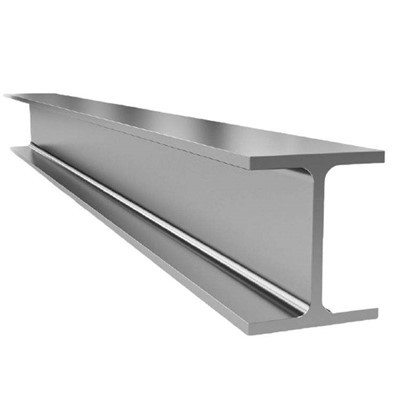
Let me start by breaking down what rebar buckling actually is, because too many folks write it off as just “bending too hard.” Buckling is a sudden, catastrophic failure where a slender structural member—like a steel rebar—loses its ability to carry compressive load, warping or bending perpendicular to its axis instead of resisting force along its length. It doesn’t happen randomly. There are specific, preventable causes, and as a supplier who’s seen first-hand how small mistakes in handling or installation lead to this, I want to walk through the science and practical steps to stop it.
First, let’s get the science right to understand why buckling occurs. Rebar’s job is primarily to handle tension, but in some structural applications—like concrete columns, foundation piles, or reinforced concrete beams under axial compression—rebar is subjected to compressive forces. For a member to resist buckling when compressed, its slenderness ratio (that’s the effective length of the member divided by its radius of gyration, a measure of how its cross-sectional area is distributed around its center) has to stay within acceptable limits. The American Concrete Institute (ACI) sets clear standards here: for example, in a concrete column, longitudinal rebar shouldn’t have a slenderness ratio greater than 40, per ACI 318 guidelines. If rebar is too slender, or its effective length (the distance between points that hold it straight, like ties in a column) is too long, the compressive force will cause it to buckle before it reaches its yield strength. That’s the core of the problem.
Now, as a supplier, I’ve seen how often buckling is traced back to three root causes: improper design detailing, poor handling and storage before installation, and sloppy on-site installation. Let’s tackle each one with actionable fixes that work, not just theoretical rules.
Starting with design, because even the best rebar will buckle if a engineer doesn’t size it correctly or specify proper lateral support. Too many projects cut corners here: for example, using #4 rebar for a load-bearing column core when a thicker #6 or #7 would have had a lower slenderness ratio. Or specifying ties that are too far apart. Lateral ties (the smaller, ring-shaped rebar that wraps around longitudinal column rebar) are non-negotiable here—they act as anchors that keep longitudinal rebar from warping, reducing the effective length. ACI 318 says tie spacing can’t exceed the smaller of 16 times the longitudinal rebar diameter, 48 times the tie diameter, or the least dimension of the column. I’ve worked on a downtown retail build where the engineer originally specified 18-inch tie spacing for a 10-foot-tall column; when we flagged that it exceeded ACI’s 16x rule for #5 longitudinal rebar, we adjusted to 12-inch spacing, and later load tests confirmed zero buckling under design loads. Another common design mistake is not accounting for temporary loads during transport or construction: rebar is often stacked and lifted in bundles, and if a bundle’s rebar is too long or not secured properly during transport, it can develop a “set” (permanent plastic bending) before it ever reaches the job site. That pre-bent rebar is way more likely to buckle under compressive load than straight, properly manufactured rebar.
Next, storage and handling—this is an area where I see so much avoidable buckling, even on well-designed projects. As a supplier, we deliver rebar straight from our mill, heat-treated and straightened to meet ASTM A615 standards, but how contractors store it after delivery makes all the difference. On job sites, I’ve seen rebar dumped on the ground in piles, left leaning against walls or equipment, or exposed to extreme temperature swings. Steel expands and contracts with heat: in summer, rebar left out in 90°F sun can bow slightly, and in winter, rapid cooling can cause uneven stress. Worse, if rebar is stored on soft, uneven ground, it can sit in a curved position for weeks, setting that bend permanently. When that bent rebar is straightened on-site for installation, it loses its uniform cross-sectional strength—one of the key properties that resists buckling. The fix here is simple: store rebar on elevated, flat racks, not directly on the ground. We supply our clients with guidelines that say rebar should be stacked in bundles no higher than 6 feet, with each bundle supported at both ends to prevent sagging. If a job site has limited space, we even offer on-site rebar straightening as an add-on service—we use hydraulic straighteners to correct minor bends before installation, which eliminates pre-existing stress points that cause buckling.
Then there’s on-site installation mistakes, which are the most common cause I see. Let’s talk about column rebar first: when workers are placing longitudinal rebar, if they don’t secure the ties tightly enough, or if they skip ties in sections, the rebar can move during concrete pouring. Wet concrete has a lot of pressure, and if there’s no lateral support, the rebar can buckle under that pressure before the concrete sets. I remember a residential high-rise project a few years back where a crew forgot to place half the ties for the first 20 feet of a 40-foot column; when concrete was poured, the top 5 feet of longitudinal rebar buckled outward, requiring us to cut out the concrete and re-place all the rebar at a cost of $12,000 and a two-day delay. That could have been avoided if the foreman had done a mid-pour check of tie spacing. Another installation issue is lap splices for rebar that’s too long. Rebar comes in standard 40-foot or 60-foot lengths, so for columns that go higher, you have to splice rebar end-to-end. If the splice is too short, or if the spliced rebar isn’t aligned, the combined member becomes more slender and more prone to buckling. ACI 318 requires lap splice lengths to be at least 12 times the rebar diameter for Grade 60 rebar, but even beyond that, misaligned splices create a weak point where buckling can start. We always advise contractors to use mechanical couplers (threaded or sleeve couplers) instead of lap splices for high-load columns—they create a stronger, more uniform connection that resists buckling far better than overlapping rebar.
Wait, let’s also address a common misconception: buckling isn’t just a problem for large, industrial structures. I’ve seen it in residential builds too—like garage foundations, where builders use too few rebar ties in concrete footings, or in patio slabs where rebar is left unsupported during pouring. Even small projects can have catastrophic failure if buckling is ignored. As a supplier, we work with everyone from small residential builders to top engineering firms, and one of the biggest gaps is that many small contractors don’t have regular access to structural engineers who can catch these issues. That’s why we make it a point to include a free, pre-installation rebar review for all our clients—we look at their design drawings, flag slenderness ratio issues, tie spacing mistakes, and storage recommendations, to help prevent buckling before it ever happens.
Another thing: rebar grade matters, too. Not all steel is created equal. For high-compression applications like bridge piers or high-rise columns, I always recommend Grade 75 rebar (ASTM A706) over Grade 60. Grade 75 has a higher yield strength (75,000 psi vs. 60,000 psi for Grade 60), so it can resist more compressive load before buckling. But it’s also stiffer, so you have to account for that in design—too thick a grade can lead to overloading, but for most compressive applications, Grade 75 reduces slenderness enough to eliminate buckling risk. We test all our rebar at the mill to meet ASTM standards, and we provide test reports to every client, so they can confirm the grade and strength of their rebar before installation.
Let’s get practical with a real example from our work. Last year, a mid-sized construction firm in the Midwest called us with a problem: their new 120-foot grain elevator’s concrete columns were buckling during the first load test. We sent our on-site rebar specialist to assess the issue, and here’s what we found: the design had specified 1-inch diameter #8 Grade 60 rebar, with tie spacing of 24 inches. That spacing was way too wide—ACI’s rule was 16x the rebar diameter, which for #8 rebar (1 inch) meant tie spacing maxed at 16 inches. The slenderness ratio was 52, which exceeded ACI’s limit of 40. The contractor had also stored the rebar on the ground for two weeks before installation, developing permanent bends in the longitudinal rebar. We worked with their engineer to adjust tie spacing to 16 inches, replaced the bent rebar, and switched to Grade 75 rebar for the top 40 feet of the columns. After adjusting, the slenderness ratio dropped to 32, which was well within standards. The final load test passed with zero buckling, and the project was completed on time. That’s the kind of problem we solve every day—small adjustments, big impact.
Now, let’s wrap this up with clear, actionable steps you can take right now to prevent rebar buckling, whether you’re a contractor, engineer, or builder:
- Follow ACI 318 design standards for slenderness ratio and tie spacing: never exceed 16x longitudinal rebar diameter for tie spacing, and keep slenderness under 40 for compressive members.
- Store rebar on elevated, flat racks, no higher than 6 feet in bundles, to avoid permanent bends or stress from uneven ground.
- Schedule a pre-installation rebar review with your supplier—most reputable rebar vendors offer this to flag design or handling issues before installation.
- For high-compression applications, opt for Grade 75 rebar and mechanical couplers instead of lap splices to reduce buckling risk.
- Do mid-installation checks: verify tie spacing, rebar alignment, and storage conditions before pouring concrete to catch small issues before they become big problems.
As a rebar supplier, our job isn’t just to deliver steel—it’s to help our clients build structures that are safe, durable, and free of preventable issues like buckling. We’ve spent decades refining our process, from mill testing to on-site support, to make sure every rebar we supply meets the highest standards, and our team is always available to answer questions, walk through your project’s design, or help troubleshoot any issues that come up. If you’re working on a project where rebar integrity is critical, or you want to review your current rebar specifications to prevent buckling, don’t hesitate to reach out to our team to discuss your needs. We’re here to help you build smarter, safer, and without the costly delays that come with avoidable structural issues.
Steel Strip References
American Concrete Institute. (2019). ACI 318-19: Building Code Requirements for Structural Concrete and Commentary. American Concrete Institute.
ASTM International. (2022). ASTM A615/A615M-22: Standard Specification for Deformed and Plain Carbon-Steel Bars for Concrete Reinforcement. ASTM International.
Subramanian, N. (2014). Design of Reinforced Concrete Structures. Oxford University Press.
Shanxi Midas Industrial Co., Ltd.
We’re known as one of the most professional steel bar manufacturers and suppliers in China. With abundant experience, we warmly welcome you to buy cheap steel bar made in China here from our factory. For price consultation, contact us.
Address: 28th, Huanqiu Jinrong Zhongxin, Xieyuan Road, Changfeng Business District, Taiyuan City, Shanxi Province, China
E-mail: midassteel@163.com
WebSite: https://www.midassteel.com/
