Hey folks! I’m in the business of supplying other elevator parts, and today I wanna chat about something super important: fire-resistant features in these parts. You know, when it comes to elevators, safety is always the name of the game, and fire resistance is a huge part of that. Other Elevator Parts
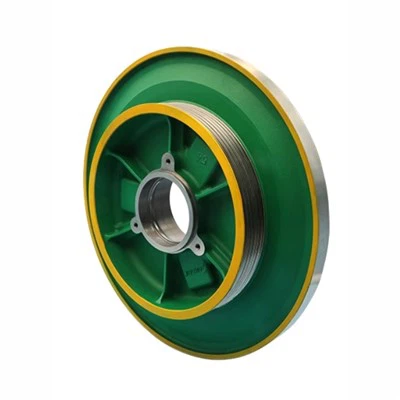
So, let’s start with the basics. Fire can be a real disaster in a building, and elevators are a key part of the building’s infrastructure. If an elevator isn’t fire-resistant or if its parts catch fire easily, it can not only make it impossible for the elevator to operate properly but also spread the fire and even toxic fumes through the elevator shaft.
Let’s talk about the control panels first. These are like the brain of the elevator. In a normal situation, the control panel manages everything from the floor selection to the speed of the elevator. But in a fire, it needs to keep working if possible, or at least not become a fuel source.
We’ve developed fire-resistant control panels. They’re made with special materials. The circuit boards inside are coated with a fire-retardant substance. This coating doesn’t stop a fire from happening completely, but it slows down the burning process significantly. It gives people more time to get out of the building and firefighters more time to control the situation.
The cables in an elevator are another crucial part. Elevators rely on cables to move up and down. If a fire damages these cables, the elevator can get stuck, leaving passengers in a really dangerous situation.
Our cables have a fire-resistant outer layer. It’s made of a special kind of rubber that can withstand high temperatures. Even when there’s a fire nearby, this outer layer won’t catch fire easily. And inside the cables, the wires are also protected. We use insulation materials that are fire-resistant, so the electrical current can keep flowing even in a fire, at least for a certain period.
Now, let’s move on to the doors. Elevator doors are the first thing passengers see and interact with. In a fire, they need to act as a barrier to prevent the spread of fire and smoke.
We’ve designed doors with a double-layer structure. The outer layer is made of a metal that has good heat resistance. It can take the heat from a fire for a while without deforming too much. The inner layer is filled with a fire-resistant insulation material. This material not only helps to keep the heat out but also absorbs some of the sound and vibrations from the fire.
The counterweights in an elevator are often overlooked, but they also play an important role. In a fire, we don’t want the counterweights to become a problem.
Our counterweights are made of materials that are not easily combustible. They’re usually made of a dense metal or concrete. These materials can withstand high temperatures without breaking down or catching fire. And we’ve also added a protective coating on the surface of the counterweights. This coating further enhances their fire resistance.
Another important part is the emergency lighting system. In a fire, the normal lighting in the elevator might go out, and passengers need to be able to see.
Our emergency lighting is powered by a backup battery that has a fire-resistant casing. The bulbs are also designed to be heat-resistant. They can keep shining even in a hot and smoky environment, giving passengers a sense of security and helping them find their way out.
You might be wondering how we test these fire-resistant features. Well, we use a combination of laboratory tests and real-world simulations. In the lab, we subject the parts to high temperatures and flames to see how they hold up. We measure things like the time it takes for the part to catch fire, the rate of burning, and the amount of smoke it produces.
In real-world simulations, we build small-scale models of elevator systems and set fires in controlled environments. This allows us to see how the parts perform in a more realistic situation. Based on the results of these tests, we keep improving our products to make them even more fire-resistant.
Now, I know fire might not be an everyday concern for most people, but it’s always better to be prepared. When you’re choosing elevator parts for your building, you want to make sure they have the best fire-resistant features possible. Our parts are reliable, and we constantly update our technology to meet the latest safety standards.
If you’re in the market for other elevator parts, whether you’re an elevator installer, a building manager, or someone involved in a new construction project, we’d love to talk to you. Fire-resistant features are just one of the many benefits our parts offer. We can have a chat about your specific needs and find the best solutions for you.

It’s not just about following the regulations; it’s about ensuring the safety of everyone who uses the elevator. So, don’t hesitate to reach out and start a conversation with us. Let’s work together to make elevators safer places for everyone.
Escalator Safety Brush References:
- Elevator Safety Handbook: General knowledge on elevator safety and related components
- Fire Protection Engineering Journals: Research and studies on fire-resistant materials and their applications in building infrastructure.
Sanjin Elevator Parts Co., Ltd.
Sanjin Elevator Parts Co., Ltd. is one of the most professional other elevator parts manufacturers and suppliers in China, featured by quality products and good service. Please rest assured to buy or wholesale high-grade other elevator parts at competitive price from our factory.
Address: 18th Floor, Xinyuan Center, Fenghe Road, Xi’an, Shaanxi, China
E-mail: elevatorparts@westdt.com
WebSite: https://www.sanjinelevator.com/
