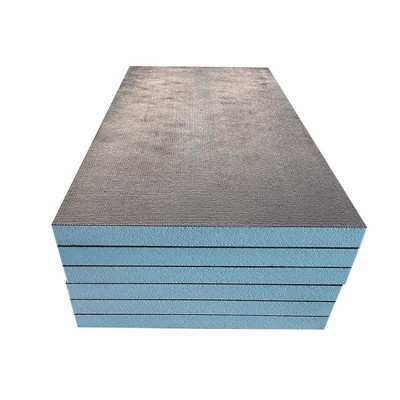
As a supplier of Standard Waterproof Backer Boards, I often encounter questions from customers about the waterproofness of our products. Ensuring the waterproof performance of the backer board is crucial, as it directly affects the durability and functionality of the overall construction. In this blog post, I will share several effective methods to test the waterproofness of a Standard Waterproof Backer Board. Standard Waterproof Backer Board
Visual Inspection
The first step in testing the waterproofness is a visual inspection. Before conducting any other tests, carefully examine the surface of the backer board. Look for any visible cracks, holes, or uneven areas. Even a small crack can compromise the waterproof integrity of the board. A smooth, intact surface is a good indication that the board is likely to be waterproof. Check the edges of the board as well. The edges should be well – sealed and free from any signs of damage. If there are any rough or chipped edges, water may seep in through these areas.
Water Absorption Test
One of the most straightforward ways to test the waterproofness is the water absorption test. Here’s how you can conduct it:
- Prepare the sample: Cut a small, representative sample of the backer board. Make sure the sample is clean and dry before starting the test.
- Weigh the sample: Use a precise scale to measure the initial weight of the sample. Record this weight accurately.
- Immerse the sample: Place the sample in a container filled with water. Ensure that the entire sample is submerged. You can use a weight or a clamp to keep the sample underwater if necessary.
- Set a time limit: Let the sample soak in the water for a specific period. Typically, a 24 – hour soak is a good standard. However, some more rigorous tests may require a longer soaking time.
- Remove and dry the sample: After the designated time, carefully remove the sample from the water. Pat it dry gently with a clean cloth to remove any surface water.
- Weigh the sample again: Weigh the sample after it has been dried. Compare the post – soak weight with the initial weight. Calculate the percentage of water absorption using the following formula:
[ \text{Water Absorption}(%)=\frac{\text{Weight after soak}-\text{Initial weight}}{\text{Initial weight}}\times100 ]
For a Standard Waterproof Backer Board, the water absorption rate should be very low. A high water absorption rate indicates that the board is not effectively waterproof and may lead to problems such as mold growth and structural damage over time.
Spraying Test
The spraying test simulates the conditions of water splashing or light rain on the backer board. This test is especially useful for assessing the board’s resistance to surface water penetration.
- Set up the test area: Place the backer board in an upright position on a flat surface. You can use a stand or a frame to hold it securely.
- Prepare the spraying equipment: Use a spray bottle or a hose with a fine – mist nozzle. Fill the equipment with water.
- Spray the board: Spray water evenly over the surface of the backer board. Make sure to cover all areas, including the edges. Spray the water for a continuous period, say 5 – 10 minutes, depending on the intended use of the board. For example, if the board is for use in a high – moisture area like a shower, a longer spraying time may be appropriate.
- Inspect for water penetration: After spraying, carefully examine the back side of the board. Look for any signs of water stains or dampness. If water has penetrated through the board, it indicates that the waterproofing is not sufficient.
Hydrostatic Pressure Test
In some applications, the backer board may be subjected to hydrostatic pressure, such as in below – grade installations or areas with high water tables. A hydrostatic pressure test can evaluate the board’s ability to withstand this type of pressure without water penetration.
- Build a test chamber: Construct a test chamber that can hold the backer board and apply hydrostatic pressure. The chamber should be sealed to prevent water leakage.
- Install the board: Place the backer board in the test chamber and seal the edges properly. Make sure there are no gaps around the board where water could bypass the test.
- Apply water pressure: Slowly fill the chamber with water until the desired hydrostatic pressure is reached. The pressure can be measured using a pressure gauge. Maintain the pressure for a specific period, usually several hours or even days for more comprehensive testing.
- Check for leakage: Continuously monitor the back side of the board for any signs of water leakage. If there is any leakage, note the location and the pressure at which it occurred.
Long – Term Exposure Test
For a more realistic assessment of the backer board’s waterproofness, a long – term exposure test can be conducted. This test mimics the actual conditions of the board’s intended use over an extended period.
- Select a test location: Choose a location that is representative of the environment where the backer board will be installed. This could be an outdoor area exposed to the elements or an indoor area with high humidity.
- Install the board: Install the backer board in the test location according to the recommended installation procedures.
- Monitor the board: Regularly inspect the board over a period of months or even years. Look for any signs of water damage, such as discoloration, mold growth, or softening of the board material. Document any changes observed during the monitoring period.
Importance of Testing
Testing the waterproofness of the Standard Waterproof Backer Board is not just a formality; it is essential for several reasons. For customers, a waterproof backer board ensures the longevity and performance of their construction projects. In a bathroom or a kitchen, a non – waterproof backer board can lead to water damage, which may require costly repairs. For our company as a supplier, providing high – quality, waterproof backer boards is crucial for maintaining our reputation and customer satisfaction. By conducting thorough and reliable tests, we can guarantee that our products meet or exceed industry standards.
Conclusion

Testing the waterproofness of a Standard Waterproof Backer Board involves a combination of simple and more complex methods. Each test provides valuable information about different aspects of the board’s waterproof performance. Visual inspection, water absorption tests, spraying tests, hydrostatic pressure tests, and long – term exposure tests all contribute to a comprehensive evaluation.
Waterproof Backer Board If you are in the market for a reliable and waterproof backer board, our products are worth considering. We are committed to providing high – quality materials that have undergone rigorous waterproofness testing. Contact us to start a procurement discussion and find the best solution for your construction needs.
References
- ASTM International standards for waterproof building materials
- Building construction handbooks related to moisture management
- Technical reports on the performance of waterproof backer boards
Address: Zhongze Village, Baohai Town, Tiantai County, Taizhou City, Zhejiang Province
E-mail: 906915688@qq.com
WebSite: https://www.yhhold.com/
