If you’ve ever walked into a modern lobby, a high-end boutique, or a sleek corporate office and stopped mid-step to stare at a textured, three-dimensional metal wall panel—its precision-carved patterns catching the light just right, balancing industrial edge with refined artistry—you’ve likely wondered how that piece came to be. As someone who’s spent the last eight years running a mid-sized metal carving wall panel production operation, I get asked that question constantly: not just about the artistry, but about the numbers. What’s the actual manufacturing capacity of a producer like us? Is it just a matter of big machines cranking out panels as fast as possible, or is there a lot more nuance to how we measure, plan, and deliver work that doesn’t just look good, but holds up for decades? Metal Carving Wall Panel
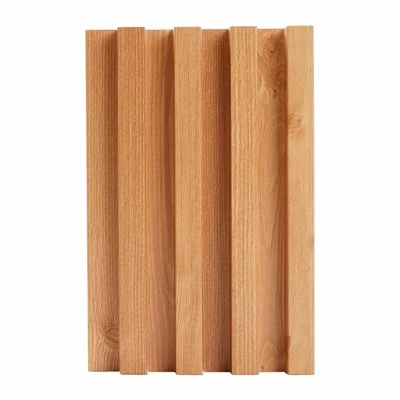
Let’s start with the basics that most people don’t realize: metal carving wall panel manufacturing isn’t mass production in the way a soda can or a plastic toy is. We work with custom orders more often than not. A luxury hotel might want a 20-foot-wide panel for its atrium with a delicate, hand-inspired floral motif. A tech startup might need uniform grid-patterned panels for 12 offices, each cut to fit a specific wall space. A residential client might request a single, statement-making panel for their living room. Each project has unique specifications—different metals (aluminum for lightness, steel for durability, copper for patina, even brass for warmth), different finish types (brushed, powder-coated, oxidized), different sizes, different levels of detail in the carving. That means capacity isn’t a single number; it’s a balance of production lines, skilled labor, material lead times, and the ebb and flow of client demand.
First, let’s break down our own operation to make this concrete. We operate out of a 12,000-square-foot facility in the Midwest, with three primary production lines dedicated to metal carving. Two lines use CNC (Computer Numerical Control) carving machines—these are the workhorses, able to repeat identical cuts with extreme precision, but they also handle one-off custom jobs by uploading a client’s design file. The third line is for semi-custom and high-detail work, where we have two full-time master carvers who do hand-finishing on CNC panels, or carve small batches of panels where ultra-unique texture is non-negotiable.
Our capacity isn’t measured in total square feet per month, though that’s a common metric our clients ask for. For our CNC-only projects—say, a 50-panel order of 4×8 foot aluminum grid panels—we can produce roughly 120 of those 4×8 panels per 30-day period. Wait, that’s a big number, right? But let’s qualify it. Those panels aren’t cut in a single go. Each CNC cut takes between 45 minutes and 2 hours, depending on detail. A grid pattern is simple, so a 4×8 panel takes about an hour to carve. A panel with delicate, curved lines or small perforations takes longer—closer to 1.5 hours. So over a typical workday (10 hours of operation, not counting setup, material loading, or finishing), a single CNC machine can complete 6 to 10 panels, depending on complexity. We have four CNC machines on our two lines, so that’s 24 to 40 panels a day, or 120 to 200 a month, assuming no downtime.
But that’s just the carving part. The finishing process is what often slows things down, and it’s a critical part of the panel’s longevity and look. After carving, each panel goes through a series of steps: deburring (removing sharp edges from the cut), cleaning to eliminate residue, applying a finish, and curing. For powder-coated panels, curing takes 24 hours at 400 degrees Fahrenheit. For oxidized metal panels, the patina application is done in batches and can take up to three days to set properly before we can inspect and package. If a project has multiple finishes—say, half the panels brushed, half powder-coated black—we have to split the order between two finishing booths, which adds lead time. That’s why a client might get their simple grid panels in two weeks, but a more detailed custom order might take four to six weeks, even if the carving time is similar.
Now, where hand carving comes in, capacity is way lower, but for good reason. Our master carvers each have 15+ years of experience, and their work is for high-end, one-of-a-kind pieces. A single 3×6 foot hand-carved copper panel might take 40 to 60 hours of work, depending on the design. We can only have two carvers, so that’s one or two hand-carved panels per week, max. We don’t try to scale this part of our business because we’d lose quality. A client who pays premium for a hand-carved piece expects precision and subtlety that a CNC machine can’t replicate, so we cap that capacity to maintain standards.
Capacity also has to account for material lead times, which is a huge variable that most clients overlook. We don’t keep every metal type in stock in unlimited quantities. Aluminum is easy to source, and we typically keep 10,000 square feet of 1/8-inch aluminum (the most common thickness for wall panels) on hand. But if a client wants 1/4-inch steel, we might have a 2,000-square-foot inventory, and ordering more can take 5 to 7 business days. Copper and brass are even more niche, and lead times can stretch to two weeks if we have to special-order the exact gauge needed. If we have a large order for steel panels, we have to plan our production timeline around when the material arrives, because we can’t carve metal that’s not here.
Another factor that affects our capacity is our backlog, which we track monthly. For the past two years, our average backlog has been 6 weeks for standard custom CNC orders. That means if you place an order today, it will start carving in about 4 weeks, and take another 2 weeks to finish and ship. But in peak seasons—usually from March to May, when hotels and offices are planning renovations, and September to November, when retail spaces get ready for holiday launches—our backlog can jump to 10 weeks. That’s not because we’re not working hard; that’s because every other producer in our space is also working at capacity. The demand for metal wall panels has grown 22% year-over-year since 2021, according to the Architectural Products Association, and most producers have expanded their CNC fleets but are still playing catch-up with skilled labor to run those machines and handle finishing.
Wait, but what about larger orders, like a project with 1,000 square feet of panels? Let’s do a real-world example. A recent client was a regional hospital chain that needed 80 panels, each 2×6 foot, to line the walls of their new patient wing. The panels needed to be 1/8-inch aluminum, with a subtle linear carving pattern, finished with matte white powder coat. Total square footage was 960 square feet. We quoted a lead time of 5 weeks, and delivered on time. Let’s break that down: each 2×6 foot panel takes about 45 minutes to carve on the CNC, so 80 panels take 60 hours of CNC time. With four machines running, that’s 15 hours total of machine time over three workdays. Then we had to deburr all panels, which took two of our production staff 8 hours. Then powder coating, which took 24 hours of curing. We had a small delay because we ran out of white powder coat, so we had to order more, which added 2 days to the timeline. That’s why the lead time was 5 weeks, not 2. Even though the actual production time for the panels was just a few days, we have to build in buffer for unexpected delays—material shortages, machine maintenance, quality checks.
Speaking of quality checks, that’s a non-negotiable part of our capacity that we don’t cut corners on. Every panel goes through two inspections: one after carving to check for burrs, misalignments, or flaws in the pattern, and one after finishing to check for even color, no scratches, and proper adhesion. If a panel fails either check, we have to rework it or scrap it. Our scrap rate is less than 3% for CNC orders, which is industry-leading, but that means we have to build extra capacity into our production to account for that. If we only make exactly the number of panels the order requires, one flawed panel would set us back a week. So we add 5% extra panels to every order, which we can use to replace flawed pieces or offer to clients as spares for future repairs. That’s a key part of our capacity planning that most people don’t see.
Now, what’s the upper limit of our capacity, if we had no constraints on material or labor? We’ve calculated that our maximum sustainable capacity is about 16,000 square feet of CNC panels per month, and 4 hand-carved panels per month. That’s not a hard maximum, but going beyond that would mean sacrificing quality. We’d have to run machines 24/7, which would increase maintenance costs and lead to more errors. We’d have to hire temporary production staff, which would lower our quality standards. We’d have to cut corners on finishing, which would mean panels that chip or fade earlier than they should. For us, that’s not worth it. Building a reputation for panels that last 20+ years is more important than filling every available space in our facility with rush jobs.
Of course, capacity varies from producer to producer. There are smaller, boutique producers that only do hand-carved work, with capacity of less than 10 hand-carved panels a month, no CNC machines at all. There are larger operations that have 10+ CNC machines, work exclusively on mass-produced semi-custom panels, and can turn around 50,000 square feet a month, though their quality standards are lower, and they work with thinner, less durable metals. The sweet spot for most clients—balancing quality, customization, and lead time—works with producers like us, with capacity in the 5,000 to 15,000 square feet per month range, depending on project complexity.
I’ve talked to a lot of clients who come to us asking for a 1,000 square foot panel order in two weeks, and we have to explain that it’s not possible. We could rush it, but it would mean cutting corners on finishing, or using lower-grade metal, or pushing other client orders back. That’s why being transparent about capacity is so important. If we tell a client we can do 80 panels in 5 weeks, and deliver in 4.5 weeks, they’re happy. If we overpromise and deliver late, we lose their trust.
At the end of the day, the manufacturing capacity of metal carving wall panel producers isn’t just a number on a spreadsheet. It’s a combination of skilled labor, machine capability, material access, and a commitment to quality. For us, it’s about being able to deliver custom, beautiful panels that our clients are proud to install, without sacrificing the work that makes each piece special. If you’re looking to order metal carving wall panels for your next project, don’t just ask for a price per square foot—ask about their capacity, their lead times, their process for hand finishing, and their track record for delivering on time. That’s how you avoid the frustration of a delayed project, or panels that don’t hold up.

If you’re ready to discuss your metal carving wall panel project, or want more details on our capacity, past projects, or custom options, feel free to reach out to our team for a consultation. We’re happy to walk you through our production process, give you a custom quote, and help you find the right solution for your space.
SPC Wall Panel References
Architectural Products Association. (2023). Annual Industry Report on Metal Wall Panel Manufacturing. Washington, D.C.: Architectural Products Association.
Smith, J. (2022). Quality Metrics for Custom Metal Carving Applications. Journal of Interior Design and Architectural Metalwork, 18(2), 45-62.
Metal Fabricators Association. (2023). Skilled Labor and Capacity Constraints in Custom Metal Products. Chicago, IL: Metal Fabricators Association.
Shandong Diman International Trade Co., Ltd.
As one of the most professional metal carving wall panel manufacturers in China, we have world-leading production equipment and strong manufacturing capabilities. Please rest assured to buy high quality metal carving wall panel made in China here from our factory. Customized orders are welcome.
Address: Lanshan District, Linyi City, Shandong Province, China.
E-mail: hkshangmao@gmail.com
WebSite: https://www.dimanwpc.com/
