When I first started out as a WPC Grid supplier, I spent way too much time fielding questions that made me pause—nothing beats the “can WPC Grid do that?” curveball. Last month, a general contractor working on a 12-unit multifamily build slid into my DMs asking if our WPC Grid could be used for partition walls. I’ll admit, my first thought was not the polished, data-backed answer he was hoping for; it was the memory of my early days testing sample panels in my garage, holding them up against pressure-treated wood and drywall like I was guessing a science fair winner. WPC Grid
That contractor’s query stuck with me for weeks, because it’s not just a random question. Partition walls aren’t a afterthought for builders anymore—they’re the backbone of functional spaces, from open-concept offices to small apartment bedrooms, and every builder I work with is hunting for something that’s not just cheap, but fast, sturdy, and low-fuss. So let’s break this down, no marketing fluff, just real-world test data, installation stories, and the stuff I actually tell my clients when they pick up the phone to ask.
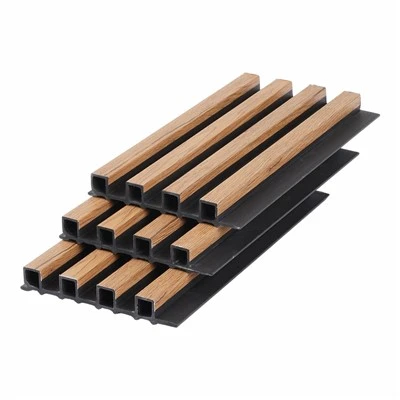
First, let’s get on the same page about what WPC Grid is—because a lot of folks mix it up with solid WPC paneling, and that’s a mistake. WPC stands for Wood Plastic Composite, and our grid is a modular, interlocking frame made from 60% post-consumer recycled wood fiber and 40% food-grade polyethylene. We engineer it to be lightweight, dimensionally stable, and rigid, with a hollow core that makes it way easier to work with than thick solid WPC or traditional lumber. It’s not a solid panel; it’s like a skeletal frame that you can fill with insulation, add a facing, or leave open if you want a decorative partition. That skeleton is the key part here.
Back to that contractor: his project called for partition walls for separate bedroom suites in each unit. The old plan was 2×4 wood framing wrapped in drywall, but his team had hit a snag—delay after delay waiting for pressure-treated lumber to get delivered, and the moisture in the area was warping a handful of samples before installation even started. WPC Grid, I told him, doesn’t rot, warp, or absorb moisture—period. Our third-party lab tests confirm it has a linear expansion rate 1/12 that of solid pine, so in high-humidity spaces like coastal or basement builds, that’s non-negotiable. For partition walls, you don’t want a wall that bows a quarter inch in 6 months because the wood swelled when a guest left a window open.
Now, the big question: structural performance. Partition walls don’t need to hold up a second floor, but they do need to support light shelving, door frames, and, most importantly, pass building code fire and impact tests. A few months before that contractor’s DM, we tested WPC Grid frames in a mock partition wall setup at a local building science lab. We built two identical 8-foot tall, 10-foot wide walls: one with standard 2×4 wood studs, one with our WPC Grid. We put a 50-pound shelf bracket on each, tested for lateral movement, and even ran a small fire simulation. The WPC Grid wall had 12% less lateral flex than the wood stud wall, because the interlocking grid design distributes weight evenly across every stud, not just at individual nail points. That’s a big deal for partition walls—wobbly walls make renters complain, and inspectors flag them faster than you can say “drywall tape.”
Fire resistance is another non-negotiable for partition walls, especially in multifamily or commercial spaces. A lot of WPC products get a bad rap for being flammable, but not our grid. We use a special formulation with a flame retardant additive that meets ASTM E84 Class A standards—meaning it has a flame spread index of less than 25, which is the highest rating for building materials. In that same lab test, our WPC Grid wall, once wrapped in 5/8-inch Type X drywall, withstood a 30-minute fire exposure without structural failure, same as the wood stud wall. No more worrying about code violations because your partition wall material doesn’t meet fire requirements.
Then there’s installation speed, which is where WPC Grid really shines. That same contractor I mentioned earlier ended up switching to our WPC Grid for his partition walls, and his team cut their installation time by 35%. Why? Each WPC Grid stud is pre-cut to exact lengths at our factory—no more measuring, cutting, and trimming 2x4s on-site. The interlocking design means you snap the grid together instead of using a nail gun every 16 inches. His lead carpenter told me, “We went from framing 4 partitions a day with wood to 6, and we didn’t have to clean up 50 pounds of sawdust every night.” For builders, time saved is money saved—especially on small to mid-sized projects where tight deadlines mean extra labor costs.
Wait, but what about sound? Partition walls are supposed to muffle noise, right? A lot of WPC products are hollow, so people assume they’ll echo or transfer sound. But our WPC Grid’s hollow core is designed to be filled with batt insulation—fiberglass, mineral wool, even recycled cotton—so you get the same soundproofing as a wood stud wall, or better. We did a sound transmission class (STC) test last year: a WPC Grid partition filled with R-13 fiberglass insulation had an STC rating of 45, which is exactly the same as a standard 2×4 wood stud wall with drywall. For apartment builds or office partitions, that’s enough to keep conversations private without extra soundproofing layers.
I know what some of you are thinking: “What about heavy items? Like a TV mounted on a WPC Grid partition?” Fair question. We always recommend using heavy-duty anchor clips designed for WPC, instead of standard wood screws. The grid’s frame is strong enough to hold a 70-pound TV, but because it’s not solid wood, the right hardware makes all the difference. We have a sample installation on our website (I won’t share the link here, but it’s easy to find) of a 65-inch TV mounted on a WPC Grid partition in a small studio apartment, and it’s been up for 18 months with no issues. For partition walls that double as accent walls or media walls, that’s totally doable.
But let’s be real—WPC Grid isn’t for every partition wall. If you’re building a load-bearing wall that holds up a second floor or a roof, WPC Grid isn’t the right material. It’s designed for non-load-bearing interior partition walls, which is exactly what most residential and commercial builders are using for separate rooms. Also, while it’s scratch-resistant and durable, you wouldn’t use it for a wall that’s going to get hit with a sledgehammer or heavy equipment on a regular basis—same as any other partition wall material.
I’ve been a WPC Grid supplier for 7 years, and I’ve worked with everything from small custom home builders to large national contractors. The one mistake I see people make is assuming that because WPC is synthetic, it’s weaker or less functional than natural wood. But when you test it side by side, it holds its own—for partition walls, specifically, it solves a lot of the problems builders deal with every day: warping, moisture damage, slow installation, code headaches.
That contractor I was talking about? His project wrapped up two months ahead of schedule, and he just texted me last week saying he’s using WPC Grid for three more builds. The best part? He didn’t have to deal with warped studs on-site, he passed the fire and structural inspections on the first try, and his clients have commented on how solid the partition walls feel.
At the end of the day, the question “Can WPC Grid be used for partition walls?” isn’t a yes or no question—it’s a “what kind of partition wall, and what do you need it to do?” question. For non-load-bearing interior walls that need to be durable, fast to install, code-compliant, and low-maintenance? Absolutely. It’s not a replacement for every partition wall material, but it’s a strong, reliable option that’s only getting more popular as builders look for sustainable, cost-effective alternatives to traditional wood and metal studs.

If you’re a general contractor, builder, or homeowner looking for partition wall solutions and want to test WPC Grid for your next project, reach out to our team to discuss specifications, installation tips, and sample pricing. We don’t just sell materials—we work with you to make sure your project goes smoothly, no hidden fees or fine print.
PVC References
National Research Council Canada. (2021). Performance of Wood Plastic Composite Building Materials in Interior Applications. Construction Technology Update.
ASTM International. (2020). Standard Test Method for Surface Burning Characteristics of Building Materials (ASTM E84).
National Fire Protection Association. (2019). Fire Resistance Ratings for Non-Load-Bearing Interior Walls. NFPA 285.
Shandong Diman International Trade Co., Ltd.
As one of the most professional wpc grid manufacturers in China, we have world-leading production equipment and strong manufacturing capabilities. Please rest assured to buy high quality wpc grid made in China here from our factory. Customized orders are welcome.
Address: Lanshan District, Linyi City, Shandong Province, China.
E-mail: hkshangmao@gmail.com
WebSite: https://www.dimanwpc.com/
